


Introduction

The Need for Follow-Up
The takeaway from parent-teacher conference feedback from parents is that some parents feel heard and leave with the confirmation that their child is doing well. Some parents on the other hand might have learned something new. And some parents might have thought they didn’t get a chance to share all the information they wanted about their child. Maybe this was the first time parents and the teacher sat down face-to-face.
Focus on De-escalation and Fostering Non-Accusing Tone
A common question parents have is how they can follow up after a parent-teacher conference without sounding accusative.
Parents may be worried about saying the wrong thing and don’t want to escalate the situation. Maybe the conference felt tense. Maybe new concerns were raised, or maybe the time simply ran out.
First, it’s important to understand that the conference format is not always optimally designed for two-way dialogue, and time may run out, so these feelings are common.
A helpful approach to emphasize is to focus on the student’s learning outcomes rather than the disagreement. Focusing on indicating that a parent wants to work with a teacher, and vice versa, to improve the addressed situation is a great start.
When reaching out to the teacher without sounding accusing, parents can try these non-accusatory communication strategies:
- Thank the teacher for the conference and shared information (even if you don’t agree with it)
- Reiterate the next steps and ask for clarification if needed. Use “we” language to emphasize collaboration.
- Stress that you want to be contacted about student progress or concerns right away
- Request for additional help or contact special education representatives if needed
Most educators and families want the same thing: for the child to succeed. Framing the follow-up around that shared goal, the student’s success, reduces the risk of sounding accusatory while still addressing real concerns.
Include the Communication Plan to the Family Engagement Strategy
- The head of school, such as the head of elementary school, follows up and collectively thanks parents for attending conferences via a school-wide post or message.
- The head of school, such as the head of elementary school, creates an anonymous, obfuscated online survey to collect information about the parents’ conference experience. The purpose of the survey is clearly explained.
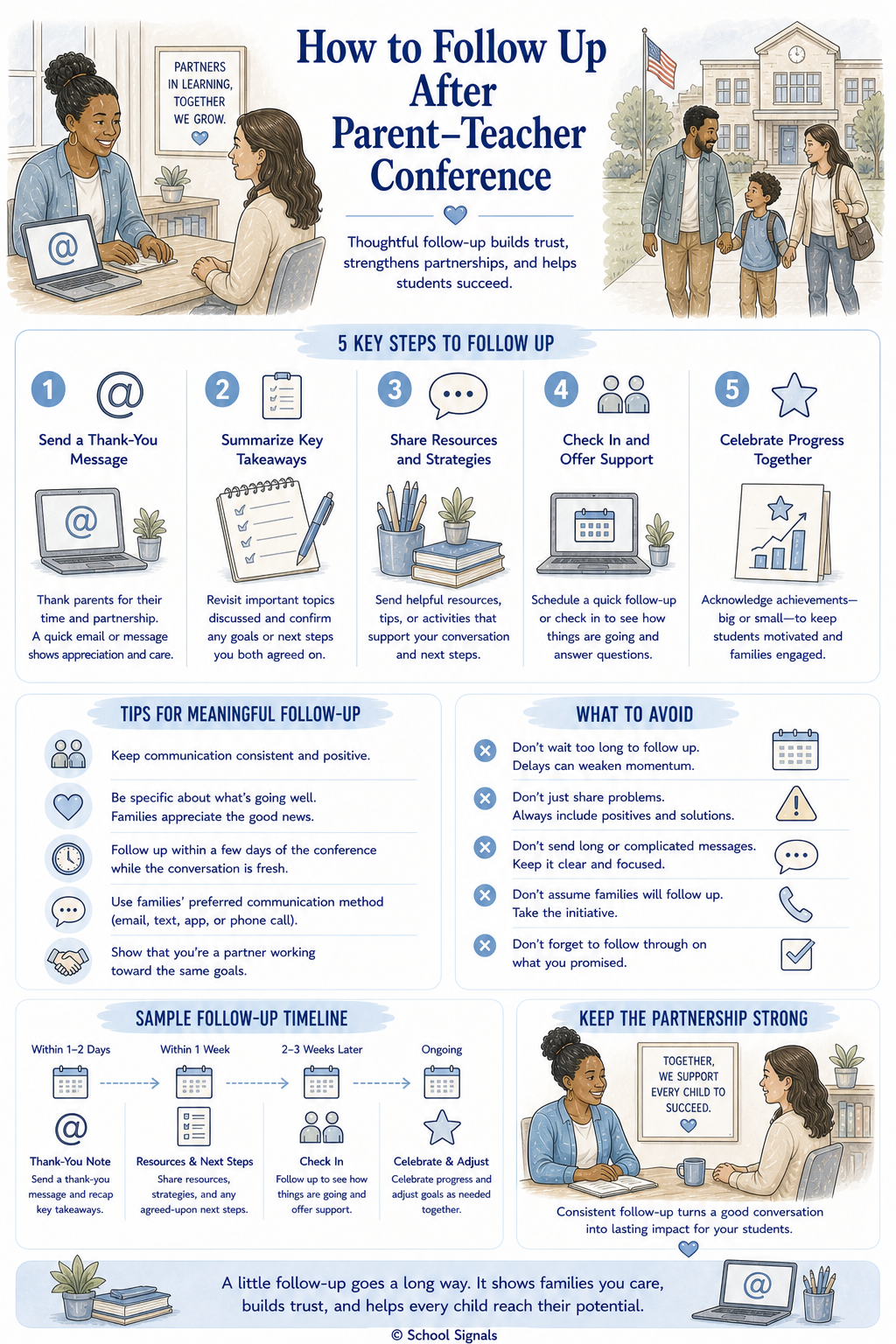
- Teachers are advised to thank all parents for their partnership by sharing positive communication in ways that reach all classroom parents, such as through School Signals Classrooms.
- Teachers are encouraged to follow up individually with those parents whose conversations were cut off due to time constraints. A private message may be considered.
- Teachers can provide helpful learning resources and support for parents now that they have their attention. The head of school can follow up with teachers to make sure they are supported.
- Teachers should let parents know concrete ways they can follow up and come together on their child’s learning.
Acknowledge Families Collectively
Staying accountable and available matters. After the conferences conclude, the head of school may address families as a group to thank them for participating and encourage them to continue partnering with the school. The head of school may consider sending the following type of message.

Ask for Post-Conference Feedback with Online Surveys
A short post-conference survey signals that the school takes the parent experience seriously and intends to improve it.
- Was communication clear?
- Did the format work?
- Was there enough time?
- Did you learn anything new?
- Did you feel heard?
- How would you improve the conference?

Ask Teachers to Follow-Up in the Classroom News
- Acknowledgement of the value of family partnerships
- Interest and the best way to contact the teacher
- Information on the next classroom event to meet face-to-face
- Mention and link to the post-conference survey.
Message Families Privately
Share Learning Resources Connected to the Conversations
Provide Weekly Updates to Keep The Communication Channels Open
By sticking to the plan we established at conferences, like sharing updates on behavior every Friday, or sending additional resources for working on phonological awareness at home, my families came to trust that I truly wanted to see their students grow and thrive.
—Christina Cunningham, Early Childhood Teacher, OK
Regular updates from the school and teacher are not just about efficient information delivery. The updates and two-way dialogue cultivate partnerships—the fabric of trust between home and school. Let’s not forget what’s at stake: the child’s academic achievement and well-being.
Parent-teacher conference follow-ups show that the school does not treat the conference as a mandatory information-delivery, but rather as a touchpoint to reach out, understand, connect and support families on students’ academic journey and social-emotional well-being. Unified school communication systems support this ongoing dialogue.


- Building Trust with Inclusive School Communication - September 13, 2026
- School Signals Introduces Student Portfolios for Personalized Family Engagement - June 23, 2026
- 10 Communication Challenges We’re Hearing from School Leaders - June 6, 2026